Best Weaver Rail to Picatinny Adapters for 11mm Dovetails and 3/8″ Mounts
Finding a reliable way to mount optics on dovetail or traditional 11mm/3/8″ systems can be challenging. The following selections convert dovetail bases to Picatinny or Weaver rails, offering low-profile risers, solid locking, and compatibility with common airgun and rimfire platforms. This guide highlights five adapters that balance precision machining, durable finishes, and flexible rail length for optimal sight acquisition and optic placement.
Summary of chosen products
| Product | Brand | Rail Type | Key Feature | Includes |
|---|---|---|---|---|
| Dovetail to Picatinny Rail Adapter | LONSEL Store | 11mm Dovetail to 21mm Picatinny | Low profile, long base, 3/8″-7/8″ converter | Locking screws |
| 11mm Dovetail to 21mm Upgraded | Bontok Store | 11mm to 21mm Picatinny | Built-in locking screws, solid mount | Locking screws |
| Low Profile Dovetail to Picatinny Mount | Monstrum Store | Dovetail to Picatinny | Multiple slot options, extended rail | Various size options |
| 3/8″ 11mm to 7/8″ 20mm Dovetail to Picatinny Rail | — | 11mm to 20mm | Low profile, wide compatibility | Risers for optics |
| 11mm Dovetail to 20mm Picatinny | — | 11mm Dovetail to 20mm | Snap-in, low profile | 4/9 slot options |
Dovetail to Picatinny Rail Adapter By LONSEL

Material and construction emphasize durability, using aircraft-grade aluminum alloy with a black hard coat anodize. The adapter converts an 11 mm dovetail to a 21 mm Picatinny rail, providing a total base length around 2.94 inches with a 3.94-inch extended rail for flexible optic placement. It is designed to fit 11 mm dovetail mounts and includes a base mount that accepts 3/8″ to 7/8″ converters. The low-profile 0.59″ riser allows mounting optics without adding excessive height, making it suitable for rifles and airguns with compact configurations. The design prioritizes stability and repeatable return-to-zero for repeatable shooting results.
11mm Dovetail to 21mm Upgraded Build-in Locking Screws Picatinny Rail
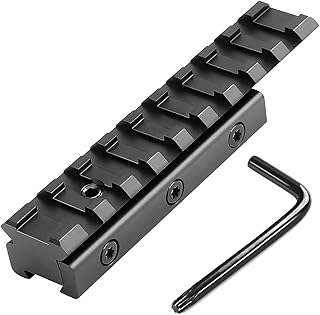
This adapter upgrades the basic dovetail-to-Picatinny concept with built-in locking screws for a firmer hold on the rail. Constructed from precision-machined aircraft aluminum with a black matte coating, it supports 11 mm or 3/8″ dovetail standards and extends the rail to about 3.94 inches for improved optics placement. The three high-strength locking screws on the side provide a secure mount capable of withstanding recoil, while maintaining a lower profile that suits compact or lightweight rifles and airguns. It emphasizes durability and repeatable alignment for consistent accuracy across sessions.
Low Profile Dovetail to Picatinny Mount

Designed for rifles equipped with 11 mm or 3/8″ dovetail platforms, this adapter addresses airguns and certain .22 rimfire rifles that use a dovetail base. It comes in multiple slot configurations—9, 14, and 17 Picatinny slots—to accommodate various optics and accessories. The extended rail projection offers additional forward placement for long-eye-relief optics, while retaining a low profile to minimize interference with sights and mounts. It supports a broad range of dovetail-based firearms and provides a stable platform for mounting scopes, red dots, or lasers.
3/8″ 11mm to 7/8″ 20mm Dovetail to Picatinny Rail Adapter

The adapter fits onto dovetail rails ranging from 9 mm to 15 mm, making it versatile for airgun and shotgun dovetail bases. The Picatinny rail portion allows mounting of Picatinny or Weaver standard scopes, as well as red dot sights. The low-profile design helps maintain sight lines and reduces the overall height of mounted optics. This option is suitable for shooters seeking a simple, reliable conversion with compatibility across common rail systems and optics types.
11mm Dovetail to 20mm Picatinny/Weaver Low Pro Snap-in Rail Adaptor

This snap-in rail adaptor converts 11mm dovetail bases to 20mm Picatinny or Weaver rails with a low-profile design. The top slot features a tense spring mechanism for quick, secure reattachment and removal, reducing the risk of optic movement in the field. It is engineered to work with most .22 and airgun rails and offers a compact footprint that suits compact rifles and pistols. The snap-in capability simplifies installation and yields reliable repeatability for optic alignment during dynamic shooting scenarios.
Buying Guide: Key Purchase Considerations
When choosing a Weaver rail to Picatinny adapter, consider the following factors to ensure compatibility and performance:
- Rail compatibility: Confirm your firearm’s dovetail size (11mm or 3/8″) and the target rail standard (Picatinny or Weaver). Some adapters support multiple dovetail configurations; verify the exact fit before purchase.
- Rail length and profile: Look at total rail length and the riser height. A low-profile adapter minimizes optical interference and helps preserve natural cheek weld and sight alignment.
- Locking mechanism: Inspect whether locking screws are included and if they employ a straightforward, robust torque pattern. Built-in locking screws enhance stability and reduce zero shift under recoil.
- Materials and finish: Aluminum alloy with hard coat anodizing offers durability and corrosion resistance. A matte or black finish reduces glare and blends with most firearms.
- Optic placement flexibility: A longer base and extended rail can provide more fore-aft adjustment for long eye relief optics, while shorter bases keep height down for compact setups.
- Installation complexity: Some adapters feature snap-in or locking screw configurations. Ensure the method matches your preferred installation and maintenance routine.
- Intended platform: Verify compatibility with airguns, rimfire rifles, or shotguns as listed by the manufacturer. Certain adapters are tailored for specific platforms, affecting mounting stability and overall fit.
- Weight considerations: Heavier adapters may affect balance and handling for lightweight rifles; factor in your use case and carry comfort.
- Maintenance: Periodic checks of screws and mounts help maintain alignment and prevent drift due to vibration or recoil.
In practice, selecting an adapter involves balancing compatibility with desired optics, maintaining a low center of gravity, and ensuring secure attachment. For hunting, plinking, or competition, prioritize locking screws and a solid aluminum build. For airguns and rimfire rifles, consider adapters that offer multiple dovetail and rail options to maximize future upgrade potential.
Leave a Reply