Best Toy Computer for Toddlers: Top Learning Laptops for Preschoolers
Finding a kid-friendly toy computer that blends play with learning can support early literacy, numeracy, and fine motor skills. This guide highlights five well-rounded options that invite pretend play, introduce letters and numbers, and offer role-play elements that mimic grown-up tech use. Each pick focuses on durability, age-appropriate features, and engaging activities designed for toddlers and preschoolers.
A quick summary of the featured products:
| Product | Brand | Key Benefit | Age Range |
|---|---|---|---|
| LeapFrog 2-in-1 LeapTop Touch, Pink | LeapFrog Store | Flip-enabled screen, multiple learning modes | 3-6 years |
| LeapFrog 2-in-1 LeapTop Touch, Green | LeapFrog Store | Role-play email and name-spelling features | 3-6 years |
| VTech Tote and Go Laptop, Orange | VTech Store | 60+ words and 30 melodies for musical learning | 3-6 years |
| Learning Tablet for Toddlers 1-3 | Bambiya Store | Alphabet, numbers, words, and melodies in one device | 12-36 months |
| Learning Toy for Kids 1-3, Green | GMAOPHY Store | Detachable base and 8 function keys for realistic play | 12-36 months |
Across these options, you’ll find features that support early reading, number recognition, fine motor practice, and imaginative play. The following sections present each product with concise details and educational value to help you compare quickly and make an informed choice.
LeapFrog 2-in-1 LeapTop Touch, Pink

The LeapTop Touch (Pink) blends keyboard-style learning with tablet portability. Its 2-in-1 design allows young learners to switch between a traditional laptop layout and a touch tablet, promoting adaptability in how a child interacts with digital content. It includes a full alphabet keyboard and a numeric keypad (1-10), supporting early literacy and counting skills. With five learning modes—ABCs, numbers, games, music, and messages—children can engage in structured lessons while enjoying a relatable, toy-like device. The portability and multi-mode format support both solo and guided playtime.
Educational value stems from interactive activities that reinforce recognition, letter-sound associations, and basic math concepts. Parents can observe progression as kids toggle between modes, cultivate spelling practice, and simulate everyday tasks like sending messages. The pink model complements typical classroom pretend-play scenarios and family role-play activities, making it a versatile addition to a child’s toy collection.
LeapFrog 2-in-1 LeapTop Touch, Green

Like the pink version, the Green LeapTop Touch emphasizes role-play and multi-mode learning. In addition to the keyboard-to-tablet transformation, this model offers pretend email functionality that helps children mimic real-life communication, including spelling their own name. The inclusion of a letter/number keyboard supports early literacy, while the ability to personalize experiences—such as name spelling—encourages ownership and practice in a social context. The green variant provides a visually distinct option for households with multiple children or color preferences.
From a development perspective, this toy supports sequential skill-building: letter and number recognition, basic typing concepts, and basic sentence formation through messages. It’s a compact, durable option ideal for travel or quiet time in classrooms and homes. The device’s versatility makes it suitable for guided instruction or self-directed exploration, depending on the caregiver’s goals for the session.
VTech Tote and Go Laptop, Orange

The VTech Tote and Go Laptop emphasizes a broader vocabulary and musical exploration. With 20 learning activities designed to teach more than 60 words, the device supports spelling, shapes, logic, and animal recognition. It also features a sounds-rich Pre-K learning center that plays 30 melodies across genres such as rock and jazz, introducing rhythm and musical awareness. An attached mouse helps introduce basic cursor control, and the unit supports personalization by allowing a child’s name, age, favorite food, and avatar to be customized. This combination of language, logic, and music offers a well-rounded early education experience.
Durability and age-appropriateness are key for toddlers who may drop or mishandle devices. The Tote and Go Laptop’s design aims to withstand such exposure while offering a variety of activities that keep children engaged. The built-in mouse adds a tactile element that aids hand-eye coordination and fine motor skills, aligning with typical preschool readiness milestones.
Learning Tablet for Toddlers 1-3

This multifunctional learning tablet combines alphabet, number, and word learning with music and sound effects. It is designed to capture a toddler’s attention through touch interactions and a variety of modes. The device helps children learn 26 letters, numbers 1-10, and related words, fostering early literacy and numeracy in a tactile, interactive format. Nursery melodies and a “Find It” game-style mode reinforce memory and recognition in a playful context. This tablet is positioned for early development and is suitable for very young learners transitioning from passive toys to interactive educational tools.
From a cognitive development standpoint, the tablet supports symbol-symbol and symbol-sound associations, which underpin reading readiness. The included modes encourage exploration, sequencing, and basic problem-solving as children navigate between learning and music. Its compact design makes it a suitable option for travel, daycare, or at-home learning centers where space is at a premium.
Learning Toy for Kids 1-3, Green
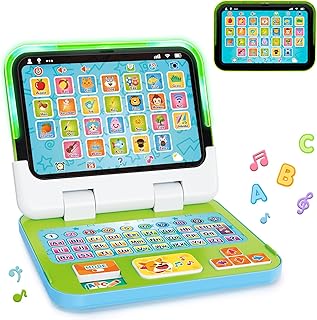
The Green Learning Toy Laptop offers a 2-in-1 design with a detachable base, enabling both keyboard and tablet-style play. It includes lights, sounds, music, and 120+ learning themes that cover letters, words, numbers, and colors. The toy’s design supports cognitive development through spelling practice, vocabulary building, and color recognition, while the detachable base enhances portability and independence during play. It’s described as suitable for toddlers aged 1-3, emphasizing early independence and confidence through interactive play scenarios that resemble real-life tasks.
Educators and caregivers may value the device for its broad content scope and adaptability. The 8-function-key setup simulates practical computing experiences, which can support social communication concepts and classroom readiness. The toy’s approach to simulated real-world tasks—like composing messages or identifying letters and numbers—helps establish foundational literacy and numeracy in a non-intimidating format.
Buying Guide: Key Purchase Considerations
- Age appropriateness: Ensure the device aligns with your child’s developmental stage. Some options target younger toddlers (12-36 months) with basic shapes and sounds, while others cater to preschoolers (3-6 years) with letters and numbers.
- Learning scope: Look for products that cover core early concepts—letters, numbers, colors, shapes, and simple words. A mix of modes (learning, spelling, music, and interactive games) can sustain engagement.
- Interactivity and durability: Age-appropriate touch controls, flip screens, and sturdy construction help withstand rough handling. A detachable base or compact form factor can improve portability and long-term use.
- Role-play and real-world relevance: Features that mimic real-life tasks (emails, messages, or shopping lists) can enhance social communication skills and executive function as children pretend to perform daily activities.
- Personalization options: If available, allow customization of names, avatars, and settings. Personalization can motivate ongoing learning and make the device feel like a child’s own.
- Music and language exposure: Devices with built-in songs or language-rich content support auditory learning and memory, which are important in early literacy.
- Parental involvement: Some models offer guided activities or teachers’ tips to structure playtime and track progress, benefiting caregivers seeking more structured learning.
- Safety and screen time alignment: Consider devices designed for safe, supervised play with age-appropriate content and built-in volume controls to protect hearing.
- Value and longevity: A device that grows with the child—offering multiple modes or themes—can extend usefulness beyond a single year.
Choosing the right toy computer for a toddler blends educational goals with play preferences. If your aim is alphabet and number familiarity plus role-play communication, the LeapFrog options provide structured learning paths and durable designs. For a broader vocabulary and musical exploration, the VTech Tote and Go Laptop expands linguistic exposure and rhythm appreciation. The Bambiya and GMAOPHY models emphasize early cognitive development with larger mode variety and interactive features, suitable for very young learners who benefit from multisensory engagement. Consider your child’s interests, attention span, and typical play environment when deciding which device best supports ongoing curiosity and foundational skills.
Leave a Reply