Best Native American Bows, Arrows, and Quivers: A Curated Guide
Explore a carefully selected collection of authoritative references and practical guides on Native American bows, arrows, and quivers. From historical overviews to step-by-step archery instruction, this article highlights reliable resources and one-value items, helping readers understand construction, use, and cultural context. Each entry is chosen for relevance to traditional and historical archery—perfect for researchers, historians, and archery enthusiasts alike.
| Product | Author/Brand | Format |
|---|---|---|
| Encyclopedia of Native American Bow, Arrows, and Quivers, Volume 1: Northeast, Southeast, and Midwest | Jim Hamm (Author), Steve Allely (Illustrator) | Book |
| Encyclopedia of Native American Bows, Arrows, and Quivers, Volume 2: Plains and Southwest | Jim Hamm (Author), Steve Allely (Illustrator) | Book |
| Bows and Arrows of the Native Americans: A Complete Step-by-Step Guide | Jim Hamm (Author) | Book |
| North American Bows, Arrows, and Quivers: An Illustrated History | Otis Tufton Mason (Author), Steve Allely (Foreword) | Book |
| 12 Pcs Archery Wooden Arrows with Feathers | Luoyer Store | Arrows Set |
Encyclopedia of Native American Bow, Arrows, and Quivers, Volume 1

The first volume focuses on the Northeast, Southeast, and Midwest regions, offering a comprehensive reference that combines historical context with detailed descriptions of bows, arrows, and quivers used by various Native American cultures. The work is enriched by illustrations that help readers visualize traditional equipment and regional variations in craftsmanship.
Encyclopedia of Native American Bows, Arrows, and Quivers, Volume 2

Volume 2 continues the reference series with a focus on Plains and Southwest traditions. It details regional equipment, material choices, and hunting and warfare contexts. The volume balances descriptive entries with historical notes, making it a valuable resource for researchers seeking pattern recognition across time and geography in Native American archery equipment.
Bows and Arrows of the Native Americans
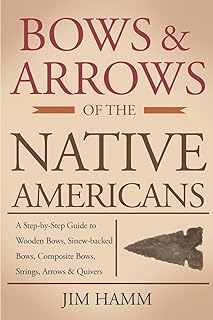
This guide offers a complete step-by-step approach to wooden bows, sinew-backed bows, composite bows, strings, arrows, and quivers. It presents techniques for crafting and using traditional weapons, with emphasis on authentic materials, construction methods, and practical maintenance for archers and historians alike.
North American Bows, Arrows, and Quivers

This illustrated history traces the evolution of bows, arrows, and quivers across North American cultures. It combines visual references with narrative context, highlighting regional adaptations, trade influences, and the roles these weapons played in daily life, ritual practice, and warfare. The foreword by Steve Allely adds helpful interpretive context.
12 Pcs Archery Wooden Arrows

This 12-piece set includes traditional wooden arrows with feather fletching designed for traditional bows and recurve or longbows. They feature wooden shafts, fixed classic nocks, and turkey feathers to improve flight stability and trajectory. The arrows are intended for both beginners and experienced archers seeking a classic look and authentic feel.
Buying Guide
Key purchase considerations when selecting resources on Native American bows, arrows, and quivers include scope, accuracy of historical detail, and region-specific emphasis. Readers should evaluate whether a resource prioritizes:
- Regional coverage: Books dedicated to Northeast, Southeast, Midwest, Plains, and Southwest regions offer deeper context for specific cultures and techniques.
- Craftsmanship and construction: Guides that explain materials (wood types, sinew, leather) and construction steps help readers understand how implements were made and maintained.
- Illustrations and photographs: Visuals support accurate interpretation of equipment features, such as limb shapes, notch styles, and fletching configuration.
- Historical context: Works that connect archery gear to hunting, warfare, trade, and daily life provide a fuller picture beyond the technical aspects.
- Author expertise and sourcing: Consider authors with scholarly backgrounds or primary materials to ensure reliability and depth.
For researchers, cross-referencing volumes can illuminate broader patterns in Native American archery across regions and eras. For practitioners, manuals that detail step-by-step construction and safe handling of traditional bows offer practical insights while preserving cultural accuracy. When possible, pairing historical volumes with modern archery guides can help readers compare traditional designs with contemporary performance standards, enriching both knowledge and practice.
Leave a Reply