Best Mini Toy 3D Printer Guide for Kids and Beginners
The growing market for mini toy 3D printers blends learning with hands-on creativity. This article highlights kid-friendly models, safety features, and easy setup, helping parents and educators choose devices that fit desks, classrooms, and small spaces. Read on for practical buying guidance, a quick product snapshot, and a focused look at five standout options.
Summary of chosen products
- 3D Printer for Kids, Safe for Children, Toy 3D Printer, Wi-Fi & App Control – SUNLU Store
- 25pcs Mini Animals Figures – 3D Printed Animals and Fidget Toys
- Creality K2 Plus Combo 3D Printer – Multicolor, High Speed, Large Volume
- Fully Assembled Mini 3D Printer for Kids – Starter Kit with Filament
- TINA2 Mini 3D Printer – Auto Leveling, Resume Printing, Open Source
Best Kids-Friendly Mini 3D Printer With Safety Features
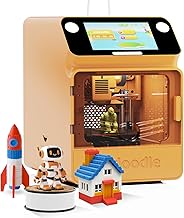
The SUNLU mini 3D printer is designed for children and beginners, arriving pre-assembled and ready for one-click printing. Its compact footprint (312x312x352mm) helps fit desks, shelves, and small classrooms without sacrificing capability. A key safety feature is the fully enclosed structure, reducing the risk of accidental contact with hot components. If the printer door is opened, printing pauses automatically and the nozzle temperature drops, helping to prevent injuries and material waste.
Smart control expands learning opportunities. Wi-Fi connectivity and app control let young makers initiate prints from tablets or phones, while USB and Cura compatibility provide familiar pathways for advancing skills. The large model library supports exploration beyond basic shapes, encouraging experimentation and project planning. Parents can supervise progress remotely, making this a practical tool for home learning laboratories.
In practice, the SUNLU model is about fostering confidence and consistency. The one-click setup minimizes troubleshooting time and speeds up the transition from concept to tangible object. With a focus on safety, ease of use, and remote monitoring, this mini printer aims to be a reliable entry point for STEAM activities and weekend maker projects.
25Pcs Mini Animals Figures for Desk Stuff

This set includes 25 mini animal figures designed as 3D-printed decorative items and tiny fidget toys. Constructed from durable materials, these figures resist fading and stand up to handling during work or study sessions. The secure construction makes them suitable for classroom use, desk collections, and student projects, offering a tangible extension of digital design work.
Beyond decoration, the figures serve as stress-relief tools and conversation starters, helping to reduce tension during long study periods. Their small size makes them convenient for travel, desk drawers, and reward boxes, turning a simple printing project into a motivating, hands-on activity for kids and teens alike.
As a practical add-on, these mini animals can complement a broader set of 3D printer projects, providing immediate, low-pressure subjects to print and customize. The figures also encourage careful finishing work and display planning, supporting broader design thinking in a classroom setting.
Creality K2 Plus Combo: Multicolor, Speed, and Large Build

The Creality K2 Plus Combo brings together a robust 3D printing platform and a Color Filament System (CFS) unit. The CFS supports up to four filament colors simultaneously with dynamic mixing, enabling multicolor prints of up to 16 colors in a single project. This expands creative possibilities for kids and hobbyists who want vibrant, multi-hued models, while the base printer handles the mechanical reliability needed for classroom or home use. Note that filaments are not included in this bundle.
Speed and precision are central to this model. A claimed 600mm/s print speed paired with up to 30,000 mm/s² acceleration delivers rapid iterations, while maintaining 0.05 mm dimensional accuracy. The printer’s quiet operation (around 45 dB) makes it suitable for shared spaces, reducing disruption during school or family time. A large build volume of 350×350×350 mm supports bigger projects and multi-piece assemblies in a single print run.
Overall, the K2 Plus Combo emphasizes speed, color versatility, and build capacity. Aluminum alloy framing contributes to stability during fast runs, helping ensure consistent outcomes across varied materials and project scales. This option is compelling for users seeking high-throughput printing with creative color experimentation.
Fully Assembled Mini 3D Printer Starter Kit

This fully assembled mini 3D printer targets beginners and home use, delivering reliability right out of the box. The compact dimensions (approx. 8.3″ x 8.3″ x 11.4″) fit neatly on desks, in dorm rooms, or classroom corners, making it ideal for students and families exploring 3D printing together. The kit includes 10 meters of PLA filament and a microSD card preloaded with model designs and splicing software, providing an immediate starting point for projects.
The auto-leveling feature and dual Z-axis rail streamline setup and improve print consistency, especially for young creators who are still learning calibration. A 2.4-inch LCD screen keeps the interface approachable, while the flexible magnetic build plate makes part removal easier, reducing the risk of accidental damage during first prints.
For educators and parents, this option balances simplicity with practical capabilities. It supports a broad range of beginner projects, from basic shapes to multi-part assemblies, while the starter filament and design library help sustain ongoing learning and experimentation in a shared learning environment.
TINA2 Mini 3D Printer: Auto Leveling and Open Source

The TINA2 Mini 3D Printer targets beginners with straightforward features and practical extras. It ships as a fully assembled unit and features auto-leveling to simplify setup, which is particularly beneficial for younger users or newcomers who want to minimize fiddling with calibration. The printer also offers an auto-resume function, allowing printing to continue after power interruptions or unexpected stops, a reliability feature for educational settings and busy home environments.
This model emphasizes accessibility with a simple 2.4-inch LCD display and a removable flexible magnetic build plate for easy print removal. While it is positioned as beginner-friendly, it remains a capable tool for exploring standard FDM materials and beginner projects. Open-source firmware and design files provide room for customization and extension, appealing to students who want to learn by tweaking settings and experimenting with optimizations.
In practice, the TINA2 Mini balances ease of use with modest adaptability, supporting a gradual progression from basic prints to more involved projects as confidence grows. The combination of auto-leveling, resume printing, and open-source access positions it as a versatile starter option for homes and classrooms alike.
Buying Guide: Key Purchase Considerations for a Mini Toy 3D Printer
- Safety and enclosure: Look for fully enclosed builds and automatic pausing if doors open or parts overheat, especially for younger users.
- Ease of use: Pre-assembled units, auto-leveling, and simple interfaces reduce setup time and frustration for beginners.
- Connectivity and software: Wi-Fi, USB, and compatibility with common slicers (like Cura) enable flexible workflow and remote monitoring.
- Build volume and speed: Larger volumes support bigger models, while higher speeds enable rapid iteration—balance with noise level and accuracy needs.
- Materials and finishes: PLA is beginner-friendly; consider removable build plates and easy filament loading for frequent users.
- Education value: Starter kits with included filaments, models, and SD cards offer immediate learning resources for classrooms and homes.
- Open-source options: Open firmware and design files can be valuable for students who want to customize and learn internals.
When choosing a mini toy printer, consider the intended user’s age, the available workspace, and the project scope. For younger learners or first-time users, prioritize safety, simple operation, and strong after-sales support. For classrooms or makerspaces, a larger build area, multicolor capabilities, and robust documentation may better support structured curricula and a broader range of projects. A balanced selection may include one entry-level model for beginners, plus a more capable option for advanced projects or demonstrations.
Leave a Reply